
COPI | Purpose | Plan | Viability | Propagation | Culture Techniques
Business Plan for Crown Organogenesis Protocols Inc. (COPI) focused on tissue-culture & organogenesis protocols for high-value perfumery crops (agarwood, sandalwood, nutmeg, cinnamon, ylang-ylang, golden champaca, Manila elemi, frangipani, Citrus aurantifolia).
Executive Summary
Mission: Develop and commercialize high-efficiency organogenesis & tissue-culture protocols for high-value perfumery crops to supply certified planting material, accelerate breeding and propagation, and enable traceable, high-quality raw material supply for fragrance, essential oil, and carbon projects.
Opportunity: Demand for legally cultivated Agarwood and other perfumery crops is rising while wild stocks are under severe pressure. COPI fills a critical gap: scalable, genetically consistent, disease-free, high-survivorship propagation materials and proprietary inoculation/organogenesis protocols that maximize resin/oil yield and quality.
Business Model: Revenue from
(1) contract tissue-culture production and sale of plantlets / rooted cuttings;
(2) licensing of organogenesis protocols & inoculation IP to nurseries and plantation partners;
(3) contract R&D & consulting;
(4) training & extension services;
(5) consumables and starter kits (media, reagents, sterile kits);
6) royalties/percentage of resin or carbon revenue on selected JV plantations.
Financial Ask: PHP 2,000,000 to set up/scale a commercial tissue-culture facility (50m² lab+cleanrooms + 32m² nursery), recruit technical team, fund R&D pipeline, and market development. (Use of funds and milestones in Section 7.)
Milestones (first 24 months):
- Lab construction & accreditation (6–9 months)
- Pilot production (Year 1: 20k–100k plantlets)
- 3 commercial licensing contracts and 2 plantation partners (by month 18)
- Register 2 proprietary organogenesis protocols, begin commercial licensing (by month 24)
Company Description
Legal Name: Crown Organogenesis Protocols Inc. (COPI)
Headquarters: Brgy. Biga, Tanza, Cavite
Core Competency: Tissue culture, organogenesis, micropropagation, genotype screening and downstream seedling hardening for field survival.
1. Market Analysis
- Target Markets:
- Commercial plantations & agroforestry developers (seedlings).
- Nurseries & agro-enterprises seeking high-quality, certified planting material.
- Perfume houses & essential oil processors that value traceability and consistent raw material.
- Carbon project developers & investors needing verified, fast-growing planting material for sequestration projects.
- Government & NGO restoration programs.
- Market Drivers
- CITES/regulatory pressures favor cultivated supply.
- Premium pricing for traceable, high-quality resin and essential oil.
- Growing carbon finance opportunities that reward certified planting & MRV-ready projects.
- Competitive Landscape
- Small tissue-culture labs (limited scale, inconsistent protocols). COPI’s advantage: species-specific organogenesis expertise and traceability services.
2. Products & Services
- Tissue-Culture Plantlets & Hardened Seedlings
- Standard: disease-free Aquilaria, Sandalwood, Ylang-ylang, Citrus, etc.
- Packaging: bulk nursery shipments, grower starter kits, and retail plantlets.
- Organogenesis Protocol Licenses
- Commercial licensing of validated protocols (for high-survivorship, faster rooting, resin propensity).
- Training, tech transfer, and QA programs for licensees.
- Contract R&D & Protocol Development
- Develop custom cultivars, growth media optimization
- Training & Extension
- Farmer training, nursery upskilling, certification programs.
- Consumables & Media
- Proprietary tissue culture media formulations, sterile kits, starter reagents.
- Value-Share JVs
- Strategic JV with plantations: COPI supplies plantlets + receives share of resin revenue or carbon credits for select projects.
3. Operations Plan
- Facilities & Equipment
- Cleanroom labs with laminar flow hoods, autoclaves, growth chambers, culture rooms, plant hardening greenhouse, and nursery shadehouses.
- Estimated footprint: 50 m² for initial commercial facility (scalable).
- Staffing (Year 1 Core Team)
- Lab Director / Chief Scientist – 1
- Senior Tissue-Culture Technologists – 1
- Lab technicians / culture workers – 1
- Nursery & field staff –
- Business development / Sales & Compliance –
- Admin / Finance –
- Quality & Compliance
- ISO/GMP-like lab SOPs, plant health certification, DENR/Wildlife Culture Permits for Aquilaria.
- Supply Chain
- Raw inputs: explant sources, media components, sterile consumables (local & imported).
- Distribution: contracted cold-chain or nursery transport to plantation sites.
4. R&D & IP Strategy
- R&D Focus Areas
- Species-specific organogenesis recipes for Aquilaria spp. and other perfumery crops.
- Faster acclimatization/hardening to reduce field mortality.
- Synergy testing of inoculation protocols and plant genotype (optimize resin yield).
- Tissue culture-based clonal lines with high resin propensity.
- IP
- Trade secrets: media compositions, process parameters.
- Patent / utility model where applicable (e.g., unique organogenesis induction sequences, inoculation delivery methods).
- Licensing agreements & non-disclosure for partners.
5. Marketing & Sales Strategy
- Go-to-Market Phases
- Phase 1 (0–12 months): Pilot customers (local plantations, research partners), demonstration plots, technical workshops, presence at industry trade shows.
- Phase 2 (12–24 months): Scale commercial sales, enter regional markets, sign licensing deals.
- Phase 3 (24–48 months): International licensing & JVs, TPaaS integration for traceability + carbon registration partnerships.
- Channels
- Direct sales to plantations & nurseries.
- Channel partners: CAPI plantations, AGAP cooperatives.
- Digital presence: product catalog, protocol briefs, traceability demo.
- Strategic alliances with carbon developers and fragrance buyers (to guarantee offtake).
- Value Proposition
- Faster field establishment, higher survival, predictable resin yield, certified genetics and traceability, and regulatory-compliant supply.
6. Financial Summary (Conservative illustrative forecast)
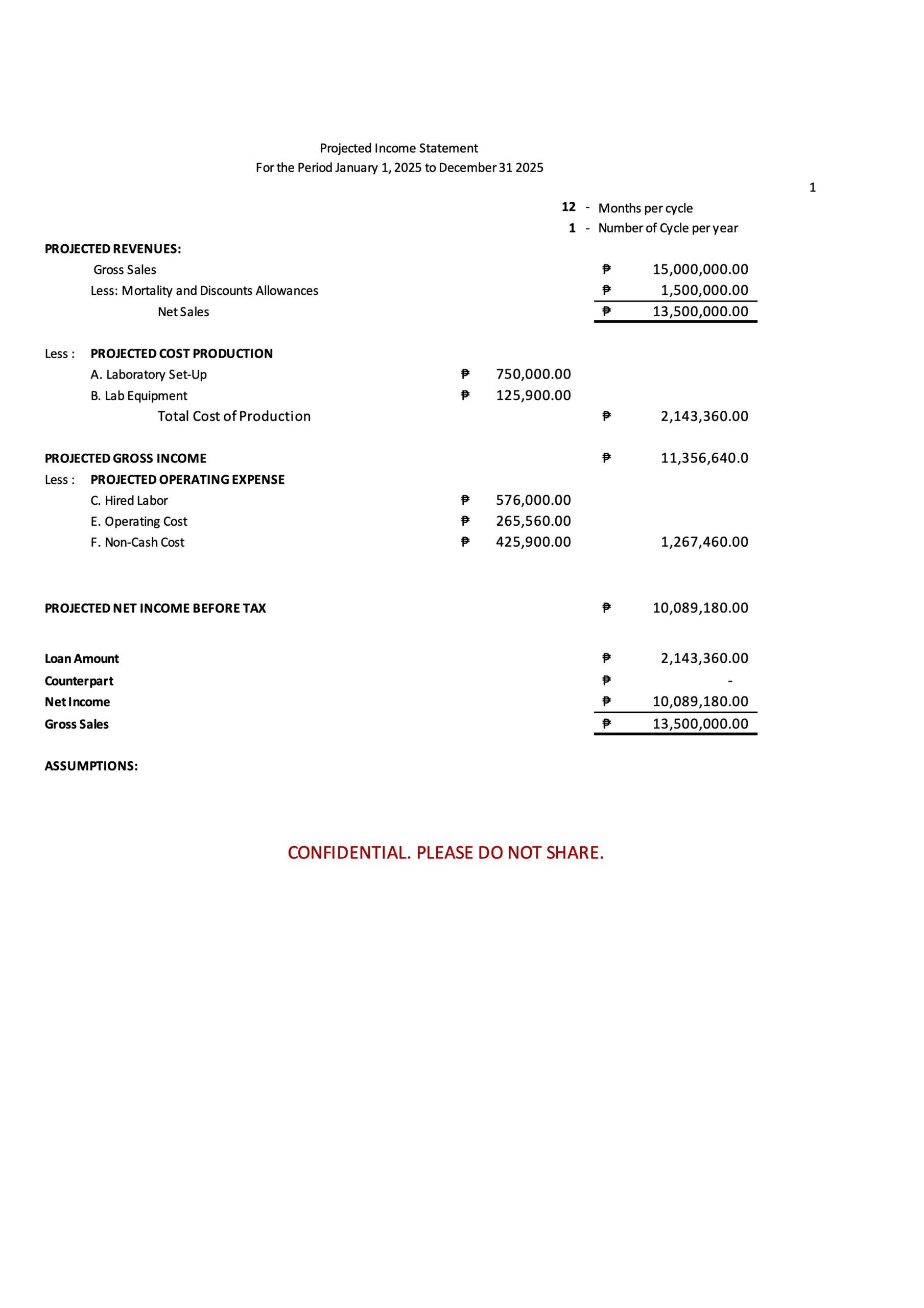
7. Funding Ask & Use of Funds
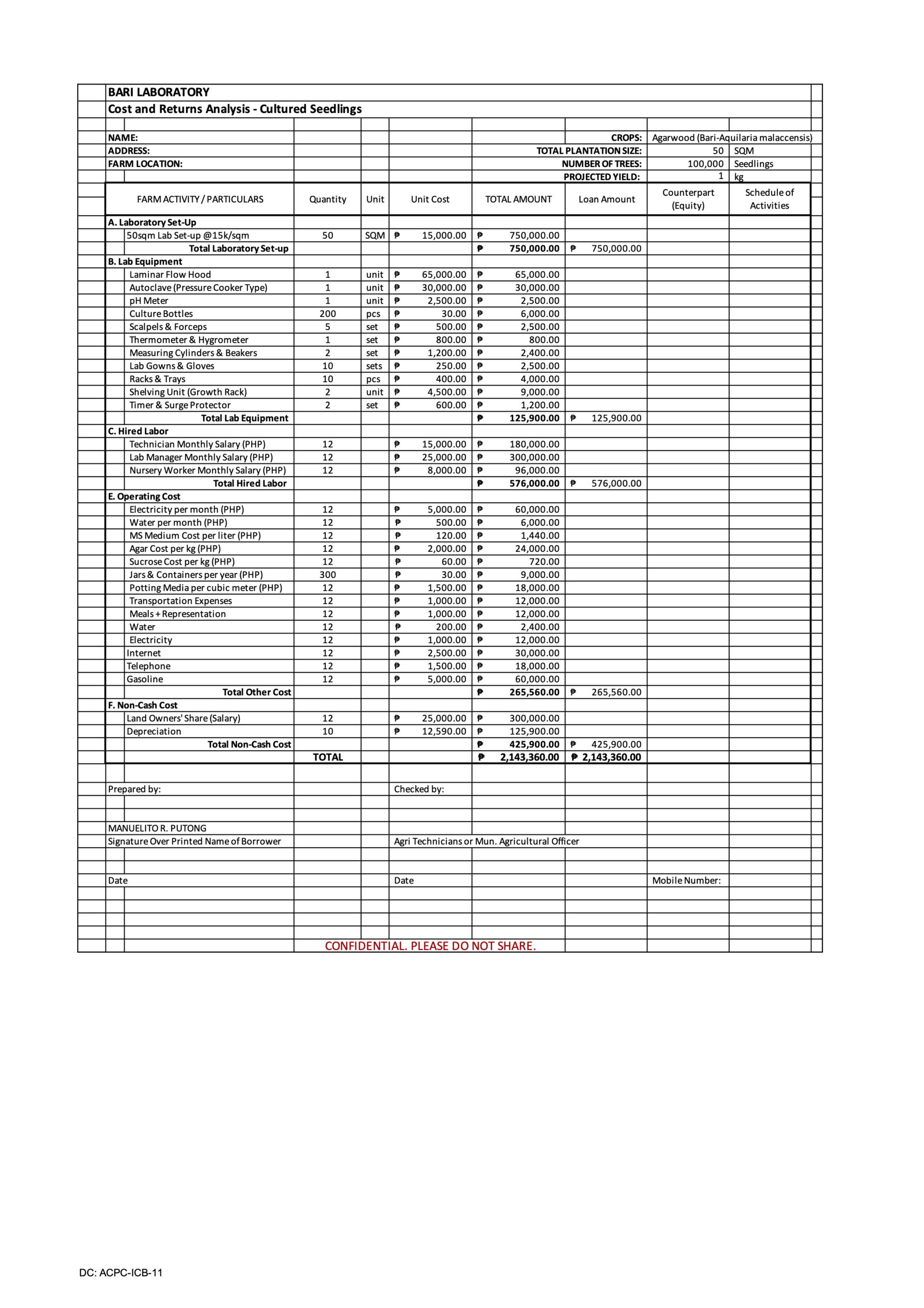
8. Risk Analysis & Mitigation
- Key Risks
- Biological risk (disease, contamination) → Strong SOPs, quality control, backup germplasm banks.
- Market risk (price volatility of resin) → Diversify revenue (licenses, R&D, consumables), secure offtake agreements with processors.
- Regulatory risk (permits for Aquilaria) → Work with DENR & legal counsel, ensure compliance & phytosanitary pathways.
- IP leakage → NDAs, licensing contracts, process obfuscation (keep core compositions proprietary).
9. Strategic Partnerships & Scaling Path
- Strategic partners (immediate):
- Cavite State University (CvSU) – R&D and talent pipeline
- Agarwood Growers Association (AGAP) – grower network & demonstrations
- Crown Agro Group entities (CAPI, CESI) – downstream offtake & JV planting sites
- Carbon developers / Verra Partners – link propagation to carbon projects
- Traceability / TPaaS providers – to certify origin and seed-to-sale provenance
- Scaling
- Phase the roll-out: pilot lab → commercial lab → regional licensing hubs (partnered nurseries across Philippines & ASEAN).
10. Exit & Return Options for Investors
- Acquisition by large agritech or seed companies, fragrance conglomerates, or private equity in agroforestry.
- Licensing/royalty income streams provide steady returns; possible IPO at scale under Crown Agri Group umbrella.